

Field Notes
Delia’s blog
posts
What Your Body Already Knows
Why confidence can't be thought into existence.
Letting body lead creates beauty in living, by design
You can’t have confidence if you’ve never done something before.
And you can’t be good at doing something if you’ve never been shown how to do it, and if you haven’t practiced over and over how to do it. And how to do it the way you do it; not the way someone else does it.
But there is a comingling of learning first from mimicking how someone else does it, until you and your body are familiar enough with the process to start making it your own, which takes longer than your head or attention span says it should, but your body knows.
So there’s this place you end up; you’ve been practicing, and you’re not terrible at it anymore, but it doesn’t feel like yours yet. It still feels like you’re wearing someone else’s coat. And your head — your head is done.
Your head understood the concept weeks ago. Your head is bored and suspicious and starting to build a case that if it hasn’t clicked by now, maybe it’s not going to. Maybe try a different approach. Maybe read another book about it.
And that moment — that’s the moment almost everyone leaves.
Not because they failed.
Because the not-knowing feels like failing.
Because there’s nothing more uncomfortable than being inside a process your mind has already finished but your body is still working.
But here’s the part nobody tells you.
Your mind isn’t just impatient.
It’s resisting.
It can feel that this new thing, if it actually takes root, is going to change the way you operate — and not in a way your mind gets to control. So it does what it does best: it makes the whole endeavor feel stupid, or slow, or not worth the effort.
Not because it’s right.
Because it’s threatened.
It is astonishing to discover that your own mind would rather be wrong and in charge than right and changed.
And underneath that, something even quieter: a loyalty to the story you’ve already built about who you are and how the world works and what’s possible.
It will choose the known cage over the unknown sky, and it will make that choice sound like wisdom.
The body doesn’t do any of this.
The body just keeps going.
The body was never confused about what was happening. It was learning — actually learning — while your mind was busy writing the eulogy.
That’s the difference between fixing yourself and freeing yourself.
Fixing is a mind project. It is performative, for an audience. It has steps and timelines and a finish line that keeps moving.
Freeing is what happens when you stop overriding what your body already knows, get your head out of the way, and let your body finally lead — as designed. It takes longer than you think it should. It takes exactly as long as it takes.
And the trick is: seniority doesn’t arrive with fanfare of any kind.
In fact its quietness is the hallmark.
You’re doing the thing one day and you realize you’re not voice-overing yourself, you’re not hyper-supervising anymore. You’re not comparing your work against someone else’s anymore. You’re not performing, or grading, or judging.
You’re just … being it. And it’s yours. And you can’t point to the day it all changed, and became yours because that’s not the reality bodies live in; that’s the way mind operates.
You’ve instead integrated, incorporated, and embodied, as designed.
If you want to explore what this feels like in your own body, I work with people one-on-one — delia@deliayeager.live.
What Opens Up When You Stop Thinking
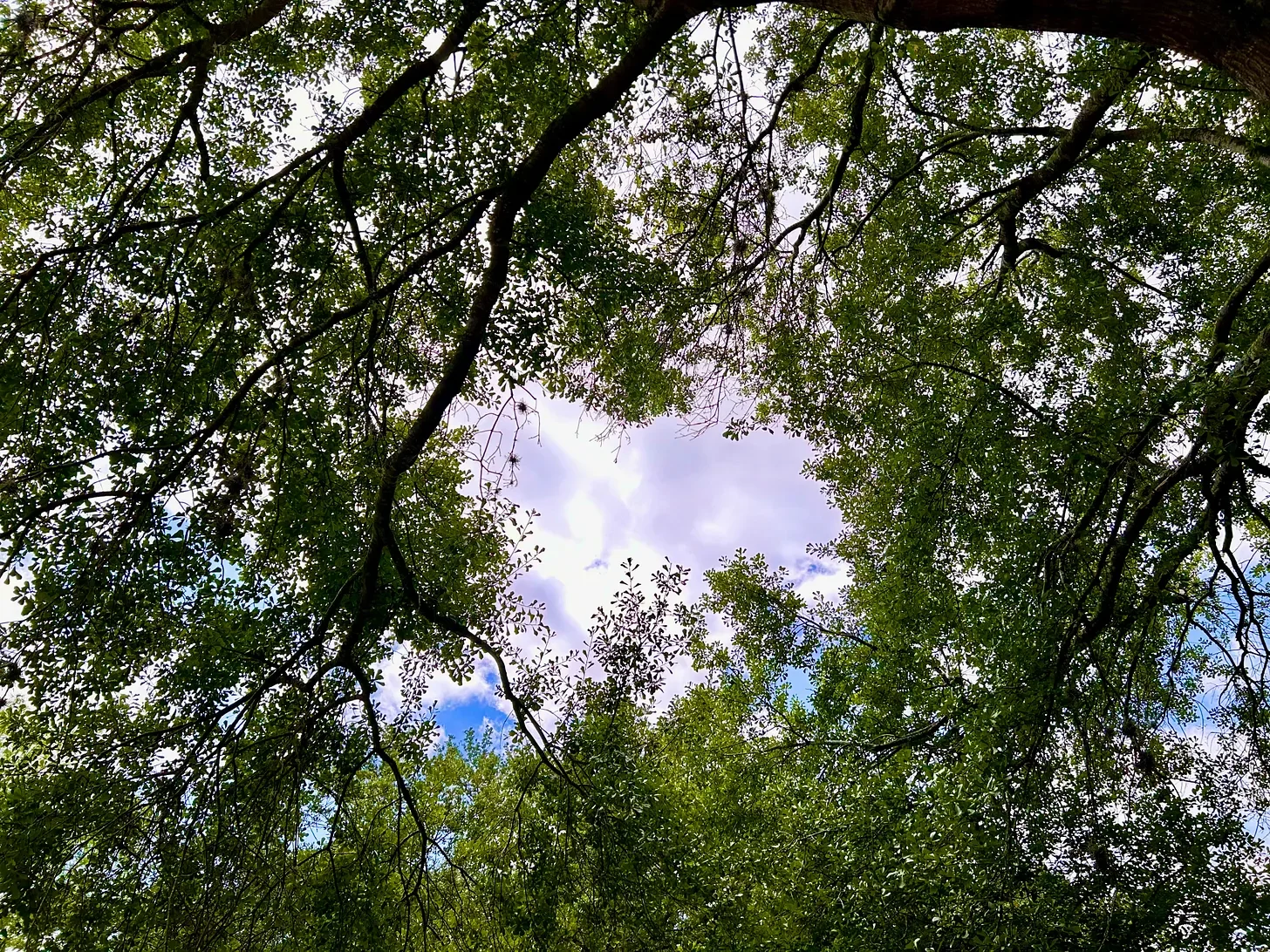
I recorded this video outside, sitting in the shade on the first 90° day of the year in Houston. Morning doves, cicadas — already, and it’s only May 9th — baby squirrels, dappled light through branches that just went from stick back to tree. The whole spring orchestra showing up on schedule, not caring whether anybody was listening.
It reminded me of the pockets of wild I used to find as a kid in the ‘60s, free-range like everybody else, looking for tadpoles in little creeks with my brother, or just sitting under trees and listening to the breeze move through them. Places where the man-made world hadn’t paved over yet. Places where things opened up inside you that you didn’t know were closed.
This one is about what happens when you stop measuring, stop defining, and let your nervous system remember its own pulse. About how being a squirrel is a full-time job and being you is too. And about the strange, almost disorienting sanity of finding out that your natural vibratory rate is pretty harmonic with the world — once you shut off the ten radios.
Watch the full video → on YouTube
If you want to explore what this feels like in your own body, I work with people one-on-one — delia@deliayeager.live.
“Things open up inside of you that you didn’t know were closed.”
“Being a squirrel is a full-time job. Being you is too.”
“Nature has its own pulse. A pulse that the modern world is determined to override. But it’s also your pulse.”
“It’s like shutting off ten TVs and radios at once.”
Why Slowing Down Feels Dangerous
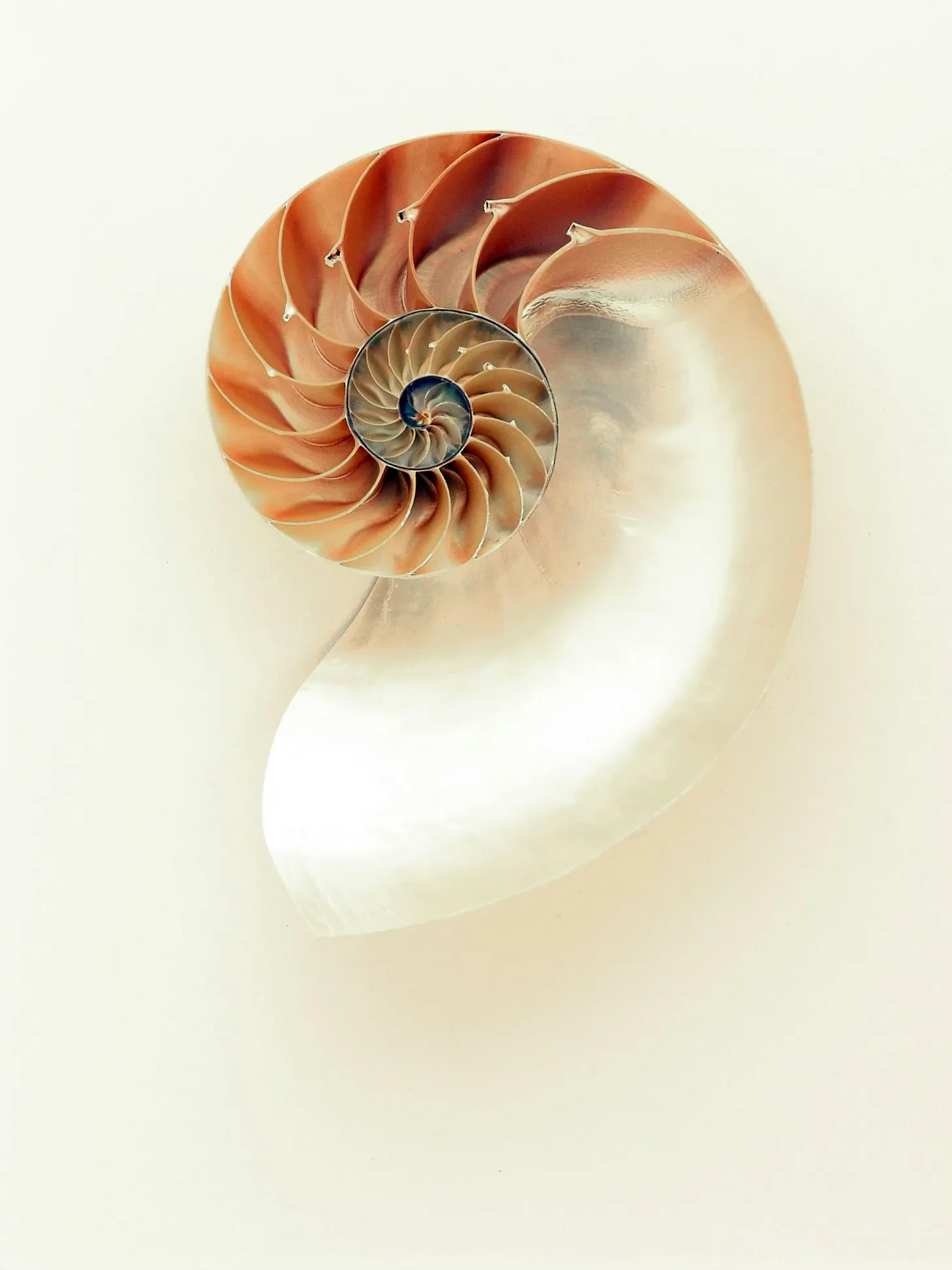
Every chamber had the right operating information — for then. Time to update.
At some point, probably when you were very young — let’s say somewhere between one and six — you looked at the world you were living in and made a decision. Maybe it wasn’t a conscious decision. It never is at that age. But your system looked around, took everything in, and concluded: to be safe here, I need to be fast. I need to be quick. I need to be a moving target.
And that was genius. Genuinely. Because it worked.
The problem is your nervous system filed that solution away and has been running it faithfully ever since. It doesn’t know you’re older now. It doesn’t know you have more resources, more options, more room to move than you did then. It just knows what worked. And it is loyal to what worked.
So when you try to slow down — when you try to center, to come back to yourself, to stop performing and just be for a minute — something in you says no. And it doesn’t feel like old programming. It feels like truth. It feels like danger. It feels like you’re about to expose yourself to something you won’t survive.
That feeling is not a character flaw. It’s not a trust issue. It’s not evidence that something is fundamentally wrong with you. It’s your system doing exactly what it was designed to do. Protecting you. With everything it has.
It’s just working with old information.
This is where I want to offer you a different question. Most of us were trained — by school, by family, by the whole apparatus of how we’re socialized — to ask what’s wrong with me? It’s practically reflexive. Something feels off, something isn’t working, and immediately we turn that searchlight on ourselves looking for the defect.
What if instead you asked: what’s right about this?
Same situation. Different question. And I mean it when I say it changes everything dynamically, almost as if by magic — because what you’ll find when you ask that question here is that what’s right about your resistance to slowing down is that you are being protected. Your system is on your side. It always has been. It may have outdated information but its intention toward you has never wavered.
That’s not nothing. That’s actually everything.
From there, you can start to bring your system newer information. Not by overriding it or white-knuckling through it. But by giving it experiences — actual lived experiences — of slowing down and being okay. Of being in a room with other people who are also trying to figure out their interior life, and discovering that what you feel and what they feel rhymes even when your stories don’t match. Of finding out, in your body, not just your head, that you are not as alone as you were maybe led to believe.
We are designed to meet each other. Not the Instagram version of each other — the real version. The one that’s still figuring things out, still carrying old conclusions, still occasionally running five-year-old software in a grown-up life.
Watch the full video → on YouTube
If you want to explore what this feels like in your own body, I work with people one-on-one — delia@deliayeager.live.
The World Is on Fire — You Don't Have to Be | Field Notes
There is always a third way.
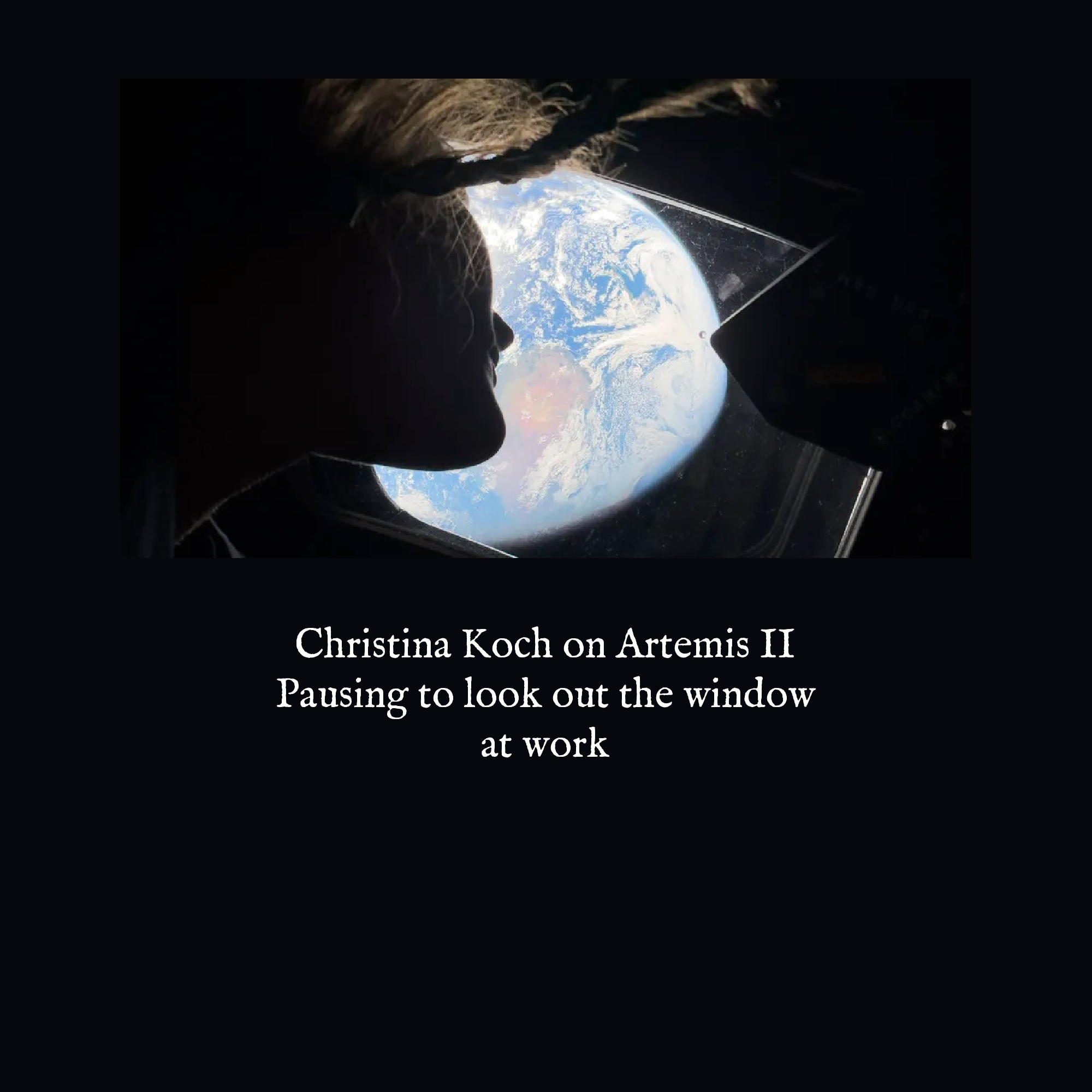
Christina Koch on Artemis II - at work, pausing to look out the windoe
The world is on fire these days, culturally and literally.
First of all, that doesn’t mean you need to be as well.
You may have people in your life telling you that you’re not overreacting enough.
You may have people around you that are in a 24/7 state of apoplectic, and telling you that if you are not, you are not paying attention, or you’re ignorant, or hurling – or implying – other negative judgments against you.
It may be you that is apoplectic, saying if you’re not upset, you’re not paying attention, and a hundred other overt to subtle judgments pushing you on to more hours of people upset talking upset about a myriad of upsetting things, because that’s what a good person does.
And yet…
There is always a third way.
Did you know that your stomach acid, your acid reflux, your creaky joints, your restlessness, bad sleep or insomnia, your headaches, neckaches, your constant, hypervigilant, hair-trigger state does not actually help anything?
It isn’t action. It isn’t productive. It cannot contribute anything productive or generative towards stopping anything bad much less building something good.
I say this gently because however self-evident it may seem after the fact, before you take it in, it seems and feels as though standing down to any degree is a let down, a slacking off, a dishonorable and irresponsible thing to do.
That is at least partly because so many of us grew up in that intensity of a 1, 2, 3 or 5 alarm constant, rolling crisis of unpredictability, possible catastrophic loss, sudden violence, and/or physical threat.
Some households looked like a crisis war zone, but most looked like middle or upper middle class, well appointed, enviable looking households and brutal families.
Trauma zones don’t always look like car crashes or bomb sites.
Often they look like a loving mom and dad, a beautiful home, social and business successes, standing in the community, and kids with good grades and smiling faces.
So now that all that chaos of trying to maintain in a family full of secrets is playing out on the international stage via our government and politics – structures that were built and committed to providing a steady, safe environment of social structures, nature settings, industries and an economy for We The People to be safe, community minded, and flourish in our daily innovativeness, our ingenuity, our creative endeavors for thriving and flourishing for all – the original betrayal of the family, playing out in our faces 24/7, everybody gets to face and heal the traumas of this culture of promises betrayed.
If you have so far been spending all your energy to come up with coping patterns and skills to get by and make it in the world anyway, as though the world is sane and you’re having a personal problem, then this is a particularly challenging time.
Resonance isn’t only musical, or for machines.
Resonance is within us every day.
Bodies like knowing what to expect.
That’s why even mayhem, threat, waiting for the other shoe to drop, can all be a kind of comfortable for you, because you know how to do that, you know how to live that way, because you needed to live that way for some intense moment, or some long, intensely threatening years growing up, or in a marriage, or at a job.
It is extremely intelligent to adapt to your circumstances, and more circumstances are unsafe than conventional wisdom or conversation allows for.
It may not be safe to talk to people about how unsafe and precarious your life and finances are, but it is totally acceptable – and a sign of your intelligence – to talk about how unsafe the world is right now. Resonance.
Children are geniuses at so many things.
They can see the truth behind the facades, and they operate on that truth instead of the narrative, which is often told to hoodwink, manipulate, gaslight the child into submission.
Kids know they are being manipulated, so they adapt and become great manipulators. Obviously that is the true currency of the environment.
Kids are genius in coming up with coping patterns to deal with the reality of the dynamics of home, not the narrative the parents or society comes up with.
Then as an adult, going through these times, you can find yourself triggered, frightened, manipulating others or yourself to navigate a situation that adult you has a lot more resources to navigate than that 8 year old inside you.
But your reactions are so well practiced, so ingrained, it seems impossible to see and catch yourself at it fast enough to stop reacting as if you are currently as threatened as your 8 year old was on the regular.
You may not even know you are triggered, or reacting to a long time ago and not in the present situation at all.
But here’s the thing. There is a moment — and it may be happening right now, reading this — where something in you goes quiet. Not numb. Not shutting down. Just… a half-second pause where the part of you that has been running full speed since you were small says, oh. I’m doing it again.
That pause is not nothing.
That pause is everything.
That is the beginning of the third way, and it doesn’t require you to fix anything, solve anything, or be any different than you are right now.
It only requires you to notice.
And breathe.
Judgment will stop the process – yes, this is a process – so just notice any thoughts and meet them with maybe, maybe not, and breathe.
Notice how in that pause, there is room — a spaciousness. A calm, a peace. The ability to take deeper breaths.
Maybe your shoulders come down from your ears a little bit.
Maybe your body sighs, or smiles, or blinks.
A funny thing about This Moment is that there is so much room, and suddenly you can see so many more possibilities.
Okay, at first maybe you can only see one or two other possibilities – but that right there is tremendous.
In this third way, you are at the center of discovering all sorts of possibilities that you can’t see when you’re “in it.”
This myriad of possibilities is always present, in the present moment, but we are present so little of the time — this is a huge revelation when it happens.
Once you can pause, you can make an actual choice.
Before that, you’re reacting to the past, thinking it’s happening again.
The news and world is full of 8 year olds fighting 14 year olds arguing with 2 year olds. It’s exhausting, and a little humorous when you finally see what’s going on from the inside. Whew!
Your system spent years, decades, practicing the safety strategies that are now causing you pain.
Your younger selves were genius and incredibly devoted defenders and protectors, and they are still on the job.
It takes some time and space for you to change your perspective to seeing that, and appreciating how devoted to your wellbeing they are.
You find yourself catching yourself in your triggered responses sooner and sooner.
What used to take months to realize, gets down to weeks, or days, then hours, then you’re aware in the moment, even if you can’t stop it to pause — yet.
The more you choose to be On Your Side, to be in the present, to set yourself free, the sooner you can see the triggers, their origins, how now is different from then, how many more possibilities you have today than back then — and choose differently.
And by doing so, the more you can live in the third way, the way of being present to the actual infinite possibilities imbued in the present moment, that wonderful, glorious, relieving - pause.
Everything you need to know, on a busy sidewalk
What you discover when you notice
Sometimes people don’t want to slow down and get Zen because they have such fast moving daily lives.
The world doesn’t just move fast, it rewards fast. Speed reads as power, as competence, as winning. Slowing down too often means soft, losing ground, loser energy = bad. So of course nobody wants to do it.
I worked with a highly placed government official some years ago who had hit a wall and knew they had to slow down or risk even greater health risks.
They were already bought in to the idea of finding a meditation and awareness practice that worked for them, and wanted to work with me specifically because the kind of meditation I teach is more about developing conscious awareness and doing energy practices that the body can sense/feel, and they really liked how the tools and practices gave that sensory and fairly immediate feed back.
This person was also wicked smart, as one normally needs to be to be that high up in the federal government. Obviously this is before the current administration.
People that are very smart, have very well developed minds, specifically successful in the institutions and organizations that have been around for some time now, have particular difficulty.
The difficultly is two-fold. One - because they’ve successfully onboarded all the systems thinking that goes into corporate or institutional culture, and are successfully navigating and living by those intricate, though too often unconscious, criterion. Two, because at those echelons of success, the pace is specific and faster than the optimal operating system of the human body/mind.
Lastly, it’s all too thinky for optimal operating in a body.
“Oh, that can’t be true,” you might say, and then list out all the common references to how “we can do anything,” and of course the modern lifestyle is the pinnacle of all human development throughout time.
Sure. Only, none of that is true. And you know it. We all know it, no matter how “secretly.”
You are deeply familiar with all the micro and macro ways you have to adjust, manipulate, adapt and change yourself to fit in and own your success.
So now, just see if you can imagine, instead of adjusting and changing yourself, your clothes, vocabulary, presentation, posture, for every situation you navigate in a day — see of you can imagine staying the same in all those circumstances, and allowing or requiring the environment to adjust to you? What you need and prefer?
Now, before you think I’m saying - be the narcissist in the room - what I’m saying is see if you can imagine not abusing others, but taking care of yourself in all those situations, and not by hiding yourself but by being yourself?
Try this — when you are walking down a busy street with a lot of other pedestrians, who moves first when you and someone else are walking towards each other?
Notice if you are the person who never adjusts their course no matter who is walking towards them, or are you the person who is always adjusting to get out of other people’s way.
Here’s the clue - if you are always one thing or the other, you aren’t noticing; you’re on autopilot, which is so often what is rewarded for being predictable.
The more powerful way is the third way. There’s always a third way, and in this situation the third way is to — notice.
Notice if there is another person coming towards you; notice if you have an urge to adjust and get out of their way, or an urge to not adjust and make them move.
Notice what is actually happening in the moment; notice whatever urge kicks in inside you; notice how it feels to make a different choice than usual; notice how it feels in your body when you do it different.
Noticing is the key to everything.
The government official I mentioned earlier — one of the first things they noticed was how often they walked into a room already performing. Already adjusted, already armored up before anyone had said a word. They'd never felt it before because it was so automatic, like plowing ahead or always getting out of the way on the sidewalk. Once they felt it, once they noticed, they couldn't unfeel it. That was the beginning of everything changing.
It's never about going unprotected; it is about discovering and practicing an entirely new, powerful presence of yourself that actually provides a much more secure living than barriers and autopilot ever could.
4/28/26
Anatomy of the Self
Why your “small house” isn’t the whole of you — and how the Infinite Self keeps calling you home.

Surrounded in abundance
Outer Facades
The faces you show others. Sometimes these personas are similar, sometimes different. It’s on a spectrum depending on what you lived through in childhood — whether you were actually safe or seen (and whether it was even possible to feel that) — and your current self-love and integration.
The Living Room
The face(s) you want to present to the world; the picture-perfect version of you. Whether that’s the most “together” or “successful” or “authentic,” this outer-facing or living-room version is the one you present to strangers, on dates, at parties, or when being introduced. This is often mistaken for “putting your best foot forward.”
The Dining Room
Still a bit formal, but more relaxed than the living room. More of your actual tastes and preferences — the real ones, not the ones for show.
The Den
Less “together,” more real life visible. A bit of the iceberg showing. A lived-in version of you with your current projects out and your energy moving more freely.
The Kitchen
Where many things are happening at once — hence, “messier.” More of what’s actually going on behind the scenes is out in view. This is the space where you’re in motion.
The Laundry/Utility Room
Here lie the unpolished things: the vulnerable, raw reactions, conclusions, assumptions — blame, loathing, sentimentality, sadness, hurt — all flung around, unsorted. Few people spend time here unless they’re in therapy, healing work, or deep self-inquiry.
The Junk Drawer Room
Behind the laundry room is the ultimate junk drawer, though it’s an entire room. The furthest place from the front door, this is where the unwanted, disowned, judged, and feared moments, situations, and emotions get sent — into a poorly lit, poorly ventilated space of disownment. This is everything you don’t want anyone to know about — not even yourself, if you can manage that.
The Vastness That IS You
All of this is in the body-thinking-personality anatomy: the parts the conventional world tells us we are. This is how we are shaped by socialization, early childhood circumstances, family systems, religious upbringing, every form of “fitting in,” and all the child’s conclusions and assumptions about how to bend, fold, and mutilate the self in order to navigate it all.
But this entire house sits inside something vastly larger.
This little house feels enormous when it’s the only space your awareness occupies. It seems all-consuming because it is where you spend all your time and attention. But it is actually small.
It is surrounded by land with trees and birds, critters in the grasses, gardens, a huge wide sky above, a brook and a lake — far more abundant nature than you can imagine from inside the small house.
Along with the open land is the cosmos — infinity itself — in a way the body/mind cannot understand.
The vastness is your natural state. Expansiveness is more your real home than the small house.
The source of you is this infinite expanse in time and space and beyond.
This vast, unbounded, energetic you is the you you’ve always been — before this body, after and beyond it. And if you expand into that vastness far enough, you touch the continuity of your own consciousness — the stream of you that has lived many lives.
You’ve had so many lives. Some luminous, some profoundly difficult. You’ve had violent, upsetting, abusive lives and deaths as well as lives of astonishingly different, aware cultures you’ll never find in any history book. Human incarnations are full-spectrum. There are a finite number of human emotions — and an infinite range of intensity and expression. Each one carries information required for navigating human life.
When someone dies a challenging or intense death, the emotional intensity of that experience leaves a vibrational marker — a “note to self” — in the Infinite Self. In another lifetime, that marker may activate again.
Because the conventional world knows so little about what and who we really are, we are often surprised, confused, or afraid when that intensity shows up with no obvious cause in the present. But nothing comes from nothing; there is always a cause behind the effect you’re dealing with — it just might not be from anything your eye can see. It might not be from this lifetime.
This often shows up, for instance, in women afraid to be themselves for fear of being tortured or burned at the stake — because it has already happened in their energetic field so many times.
In men, it can surface as a deep fear of visibility or leadership because they’ve been executed or overthrown for it in other lifetimes.
What surfaces now is never random, meaningless, or accidental. It is your own consciousness resonating with something in present time in your life, to help you reclaim disowned parts of you, discover depths of wisdom, and bring it into your current awareness — so you can stop living as the small house and return to the vast, infinite Self that has always been you.
11/16/25
Why You Can’t Relax (Even When You Want To)
How early survival strategies train your adult nervous system to distrust ease —
and what to do about it now.

Unsplash image, Unknown artist
Have you ever noticed how your stuff is stuff, whereas other people’s stuff is crap in your way? Their stuff is crap that needs to be put away, and stay put away, while your stuff and projects look appealing to you and affirm you.
Believe me, they feel the same about your stuff. Some people truly don’t register any of it — they move through life un-present, not noticing anything, and some people simply don’t think that way.
This is true for other stuff, stuff that shows its presence, but not in discrete molecules necessarily.
When you’re in crisis, some people genuinely can’t see what the big deal is. If you are panicking about a big, surprise bill that needs paying, or how to get shoes for the kids, or food, there are people you encounter that simply wouldn’t get it.
They dismiss other people’s emotions — but justify their own. However, when their house is on fire, when their finances are on the line, when their loved ones are in danger, when they are experiencing threat of any kind, they absolutely will display emotions.
If you aren’t matching their emotional urgency, they’ll either lecture you or freeze you out.
It goes even further.
When your security is threatened by their not understanding, or doing things the same old way, or avoiding it all altogether, you get angry and frustrated. Why can’t they see how their behavior impacts you?
Maybe if you’re kind enough, helpful enough, pleasing enough — if you pretzel yourself ENOUGH, surely they will finally see and stop doing what it is that is so threatening to your security.
This strategy was brilliant for the circumstances of a small child that came up with and acted on it. It probably worked well then.
But the strategies that our brilliant little 4-year-old came up with really do not work when you’re an adult. And as an adult, contorting yourself to keep others stable is painful.
In fact, reinforcing the idea that you cannot get your needs met without convincing someone else to take care of your security for you is painful because it shows that there is a part of you still frozen back then, when you could not take care of yourself. Frozen in fear and powerlessness, ready to be thawed with loving attention – from you – and brought into present time. This is how you rescue you now, for a retroactive and future healing; all in present time.
See, it was brilliant in childhood because it was appropriate to the terrain. Kids are dependent on adults for quite a while. It’s a genius strategy, for then.
But if you aren’t doing the parts work, the shadow work, the loving reparenting work, it will never feel like you can do things for yourself now, because the 4-year-old you is hanging on too tight, in too much fear, to allow the nervous system, cortisol, peptide cascades to stop.
The 4-year-old has never experienced feeling safe, and by extension, being safe.
One of body’s jobs is to keep us in status, the most often state the body has experienced. So if you grew up under constant threat, constant uncertainty, never knowing if the safe adult will show up or the crazy one, your little body will be calibrated to constant threat.
That means that your body-energy-nervous system will identify relaxed, rest-and-digest as threatening, unsafe, to be avoided and not trusted in any way.
This biochemical, bio-electrical system is not in your conscious awareness. It is your autonomic system.
So no matter the amount of mental, talk therapy you think your way through, if these deeper energetics are not addressed, you will never really relax, feel safe, let go into rest and digest, the restorative state bodies are built to live in.
I’ve seen estimates that say most 60–90% of people’s days are spent in some version of vigilance, internal bracing, tension loops, emotional monitoring of others, mentally and psychically scanning for threat, failure, rejection, sudden attack, overstimulation of all kinds, including high doses of electronic and techno overload and misinformation, and unprocessed micro-stressors.
Even when people think they are fine, they are unaware of how shallow their breathing is, how “On” they always are, how low-grade numb they are to “block it out,” so they can just get through the day.
Most people, when they first experience their true parasympathetic baseline, where we are organically meant to live, they don’t trust it, and it’s not comfortable, and can feel like a threat.
Children are fed the message, knowingly or not, that they are the problem, and no matter how far removed whatever is going on from the child, the child will interpret all the tension and upset as having to do with themselves.
Now it is time to become aware of what you are doing, and what age you are thinking/being, in any given moment.
By bringing yourself into Present Time more and more often, the more these things can begin to unwind, unfurl, and release.
The more you are living in Present Time, the more you see that you are an adult and not a 4-year-old, and that you have tools and resources that your little one did not have, and that now you can do for yourself what the little one could not.
That will help your inner little one(s) feel increasingly safe over time, because they experience how adult you is now listening, and taking care of things, in Present Time.
Your Body Is Telling You Something
Listening As Spiritual Practice
Your body is telling you something. Every sensation carries navigational information about your environment—information that, when understood, changes everything about how you live and how you experience Life itself.
Usually you notice sensations after the fact. You notice how you have a headache, backache, stomach trouble, or that your shoulders are up around your ears, or the tightness in your calves when you walk. But your body was talking to you long before that, all during the tightening-up process. Since you weren’t listening, it kept turning up the volume—ratcheting the tension—until you noticed.
It isn’t that your body is trying to punish you, but that it’s trying to get your attention to communicate something to you. Yet you’ve been trained to ignore your body, to “feel the burn” or push through the pain—which is exactly the opposite of how the body operates.
Your whole body is a sophisticated sensory system that perceives energies far beyond what the physical senses can see, hear, feel, smell, or touch. It is wiser and far greater than anything ever said in conventional wisdom about bodies. Your body is not a machine or a computer; it has far greater sensitivity, wisdom, and intelligence than either of those ever could.
Your body tells you when you are in the presence of a lie—from others or from yourself—when other people’s energy and information are clouding your capacities, when you are sensing untrustworthiness, danger, relief, joy, and so much more. But the programming from society is misleading and inaccurate, so no one learns the body’s language and styles of communication.
Every sensation has a message, and every message has a tone. Some whisper, some throb, some expand like light under the skin. When you start to listen instead of analyze, everything shifts—and the conversation begins.
So how do you begin to listen? You start by noticing. Not thinking about what you notice, not explaining it, just noticing. The body’s language isn’t made of words—it’s made of sensation, texture, tone. It speaks through warmth or coolness, through the tightening that says no and the softening that says yes.
At first, you’ll catch it after the fact. You’ll notice—hey, my stomach is upset; I must have a bug. Then, my stomach is upset; it must be something I’ve eaten. Then, my stomach was upset when I was talking to someone last month, then last week, then a few days ago—and eventually you notice as it begins to happen.
That’s becoming aware. Bodies live in time and space, and learning takes time. That’s fluency beginning. You are retraining yourself to listen to the instrument you live in.
Over time, you start to notice sooner—in real time. You’ll feel the moment your stomach contracts in someone’s presence, or when a thought brings heaviness instead of lightness. The conversation with your body becomes continuous, like a friend you had forgotten you could trust.
When you begin to listen this way, everything changes. Decision-making ceases to be a mental argument of pros and cons and becomes a sensory knowing. The body shows you what aligns before the mind can justify it. You start making choices that match your energy instead of fighting against it.
Listening is not analysis; it is attention without agenda. The analyzer wants to label and solve; the body wants to communicate. When you simply attend, the body exhales; the shoulders drop from your ears. The tight places begin to unwind—not because you forced them to, but because they were finally heard.
As you keep noticing, another layer of awareness appears: what’s mine and what’s not.
Not every tension actually belongs to you. The body feels everything—the weather in the room, the moods of others, the unspoken undercurrents. If you grew up amid unhealed adults—addiction, instability, or mental distress—your system learned to translate everyone else’s emotion and pain as a survival strategy. It assumed it was all yours to begin with, or all your responsibility anyway.
When you start to listen, you’ll discover how much of what you feel doesn’t belong to you. That’s not a judgment; it’s an observation. The body is aware by design—receptive, relational, present. It picks up information from the world around you; that sensitivity is part of the human navigational system.
The practice now is to resensitize and learn to notice, “Is this mine?” before you react to it. You may feel a heaviness that suddenly lifts when you ask that question. You may notice tension dissolve the moment you realize it isn’t actually yours. That’s your body releasing what it was carrying on behalf of your survival, taking care of others you know, or of the collective field.
Listening at this level changes your relationship with sensitivity itself. What was annoying becomes vital information for your best navigation. What once felt like overload begins to feel like useful intelligence.
You start to discern texture—your own calm versus someone else’s anxiety, your truth versus another’s projection. The world doesn’t become less intense; you become clearer within it, and therefore more at ease with it all.
Over time, your body becomes your compass again—a trustworthy ally in every environment. It tells you when to rest, when to move, when to speak, when to wait. It tells you what’s aligned, not by reasoning but by resonance.
Your whole system undergoes a nearly effortless recalibration, re-attuning to your true nature. That’s sovereignty, lived through flesh—embodied. Not the mind’s idea of control, but the quiet authority of being at home in your own field.
Authenticity isn't easy, but it is Freedom
Hello. I wanted to talk a little bit about authenticity and the whole concept of being your authentic self, of becoming more you. There’s a lot of support for being your authentic self and that it’s OK to be different from everybody else. That sounds groovy, that sounds real. But there are a lot of unintended consequences that come with wanting to be more authentic.
As you grow into your authenticity, one of the things you come up against is the need to fit in. It’s a primal need, a primal urge, and like pretty much all the other needs and desires, it has been overwritten by programming and confused, inaccurate information. The theory is that if you don’t fit in—and this is subconscious, not in your brain with words, but deeper—if you don’t fit in, you’re not safe. So the first premise is: if you’re just you, you can’t fit in. On a socialization level, that’s pretty true.
Especially as a little kid, you think, “I have to adapt to the tribe I’m in,” which is whoever you’re living with. Most families are somewhere on a spectrum of dysfunction and functionality. Some are seriously messed up. A baby is supposed to be looking at the mom for connection and reflection—the mom reflects the baby back to the baby. If that’s distorted, which it usually is because moms weren’t “momed” properly either, then the baby makes conclusions. The baby deduces: “If I’m really quiet, they won’t hit me,” or “If I smile and giggle a lot, they’ll like me better.”
So right from the beginning, the consciousness of the child figures out the room before language. Energy is our first language, and for those who are clairvoyant, pictures are too. As a little kid, you can feel disapproval, you can see how they react and respond, what gets your needs met and what doesn’t. You’ll adapt. The baby, then the child, comes up with behaviors that are conversations with the mom, then the other adults, the dad, siblings.
Learning to be yourself doesn’t really come into it unless you had an extraordinary and unusual kind of parent and home life. For those of us who did not, no matter how well-meaning our parents were, what we think of as our personality is basically a collection of coping patterns and strategies to get our needs met. We’re supposed to have our needs met, but society is so corkscrewy.
After 20 or 30 years, you discover your relationships repeat your sibling and family dynamics, because you’re still acting out those conclusions and assumptions. They give you mixed results, and as you get older, worse and worse results. Eventually you realize: “Oh my God, I have no idea who I am.” You’ve been a collection of brilliant strategies—they were brilliant in the moment, but not for a lifetime.
Often society makes us wrong for a lot of things, so we deduce that we have character defects or pathologies that need fixing. The culture is obsessed with what’s wrong and problem-solving. But reducing everything to problem-solving cuts out tremendous wisdom and other possibilities.
At some point—maybe in your 20s, maybe later—you realize you don’t know who you are. And in our culture, there’s shame in that. As insane as being told in 8th grade you should know what you want to do for the rest of your life. Another crazy premise is that you’re a utility. “What is your function going to be? What is your purpose going to be?” But think about it: you’re a human being. Being is in the name. Being is dynamic—alive, in motion, in relationship.
So you find yourself not knowing who you are and assuming everybody else does. It looks like everybody else has it figured out, and somehow you didn’t get the handbook. That reinforces the lie that you’re not good enough. But when you hit that place of “I don’t know who I am,” that’s actually the point of beginning. That’s when you can stop pretending.
Most of us pretended for safety and social well-being. So when you reach the threshold of leaving behind predictions, conclusions, assumptions of who you are, who they are, what life is—you stand in front of this vast spaciousness. It might look bright and blinding, like you can’t see anything ahead. It takes courage to say, “I don’t know who I am, and this is an adventure.”
What you’re leaving behind are definitions, conclusions, socialization, coping strategies, and other people’s biases. Nobody wakes up saying, “Yay, I don’t know who I am,” but it really is a good thing. We’re in a period of human evolution where constructs are falling apart. While people argue about right and wrong and what to do, the higher perspective is that things fall apart so they can come together in a better way—something that fits you better, suits you better.
It’s like a long-term marriage ending with deceit. At first it feels catastrophic—“My whole life was a lie, I was made a fool.” But later you discover: “Thank God, I’m not living a lie anymore. I’m not being gaslit. I get to decide what I want to do and who I am.” There’s a growth period of adjustment—emotional, uncomfortable—but it’s breaking up with lies. And that means truth is ready to support you. You can form a more comfortable understanding of yourself—less rigid, less defined by others, more semi-permeable, allowing for change.
That gives you freedom and spaciousness. You connect with who you really are: an infinite being with this amazing body, on this phenomenal planet, at this amazing time. So many possibilities. You define yourself less, use others’ definitions less. You discover the more you are you, the faster you stop getting along with people who don’t work for you or who want to change or judge you. And in reacting with them, you see where you’ve judged yourself. You get free of that.
You discover that being you is the most comfortable place on the planet. You’re connected to your higher self that knows what your body-personality may never know. But your body-personality is OK with that, because it knows your Spirit has your back. All your different parts, all your ages, can relax and get along because you’re living in the truth of you, however fluid it may be.
Yes, it’s scary to individuate from friends and become your authentic self, especially when that’s still amorphous. The trade-off is that you get to be you, and you get to have your back. Other people may fall away, other relationships may end, and that’s happening on the planet right now. But when you have you, your cup is full, it’s overflowing. You attract people who aspire to have themselves and have their own back. Friendships then are based on more than survival or hiding.
It feels great. You can’t give what you don’t have. If you don’t love yourself, have compassion, spaciousness, and self-acceptance, you can’t give or receive those things. But when you do, your cup runneth over. You know who to take up with and who to walk past, which saves time, energy, and heartache.
Becoming true to yourself, becoming your authentic self, is a journey. It includes rites of passage, which can be daunting. But the more you focus on being on your side, on being who you came here to be, the more you’ll know it’s a gift. And it is a gift—not only to you, but to everyone. People you’ll never meet benefit from your seeking sovereignty and learning to live from that.
So—hope this helps. See you later.
This is the transcript of this YouTube video from 10/28/25
The Facades Are Cracking Everywhere
You are a collection of coping strategies and patterns built in childhood — ways to get your needs met in a world that socializes you to strategize, feel ashamed, and orient to others over yourself. Then it blames you for trying to get those needs met. Even our natural and appropriate needs — to be included, to fit in, to stay safe and secure — are used against us.
As social animals, we all need relationships, starting with our earliest carers. But carers themselves weren’t cared for in healthy ways, and that wounding stretches back through generations. Some parents managed better than others, but it all boils down to this: right now, in this society, the old coping strategies and facades no longer work, personally or collectively.
We were taught that our problems are personal — flaws of character, lack of money, intelligence, ambition, beauty, or charm. Society pretends to be neutral, but it isn’t. It has long been built in support of money, domination, and profit for the few. The gaslighting is complete: turn people into “not enough” and sell them endless fixes.
And yet — you’ve no doubt noticed it — the facades everywhere are cracking.
That recognition can spark anxiety. When society itself looks unstable, when the promise of protection in exchange for hard work falls apart, it’s jarring.
The message was always “fit in, do as you’re told, and you’ll be safe.” But the truth is out: no amount of fitting in keeps you safe anymore.
In fact, fitting in with an insane society requires self-abandonment - separation from your highest and truest Self, your Spirit.
Inside, you may be in deep pain. It is reality shattering to discover that what you believed in — what you never even thought to question — not only isn’t what it seemed, but cost you more then it gave.
But there is another side.
Flash forward:
You know, not just with your mind but with your whole being, that you are an infinite being with an amazing body. A powerful body with the most sophisticated sensing system imaginable.
Your emotions and sensations are not flaws, but constant readings of your environment — local, regional, global, even galactic. They report not to the anxious mind, but to You, the Infinite Self.
From this place, your body naturally shifts back into rest-and-digest, as nature intended. You laugh more easily, expand into your full energetic power, and engage joyfully with people who resonate with you. Together you co-create innovations that support humanity and spiritual evolution.
Psychic abilities are recognized as normal. Wizarding schools and mystic training thrive. Our gifts are not hidden but honored.
Those attuned to water restore rivers, oceans, and coral reefs. Others work with air, forests, wildlife, and soil. Society reorients itself toward supporting life at every level.
And each day, humans live with greater groundedness, honoring both body and spirit, both earth and cosmos.
✨ If you’re feeling the cracks in your own life and want support stepping through into your infinite self, you can book a reading with me here.
Grief Can Feel Like a Foreign Land
Learning permission, daily practices, and sovereignty in the landscape of loss
Grief can feel like a foreign land, especially if you’ve never been there before. For some, it’s the loss of a grandmother or a beloved friend. For others, it’s the passing of a public figure who embodied kindness and generosity. Either way, grief can hit hard, and it doesn’t get talked about enough.
I’ve had my share of losses. The first one that struck me personally was at thirteen, when a close family friend died of cancer. She had been a strong, loving presence in my life, someone who taught me unconditional love and the vital difference between “what you did was wrong” and “you are wrong.” I didn’t get that from my family—but I got it from her.
After she died, my mother, a librarian and a deeply sensitive woman, got us both copies of On Death and Dying by Kübler-Ross. She and I both read and it, becoming a little mom-and-me book club. That was during a time when I had already lost a 17-year-old cousin in a drowning accident. Those two deaths shaped me deeply, and we talked about them in the context of that book, and our sense of loss.
The grief and loss were real, but so was my talking to them whenever I wanted to. Mom was glad I felt that way but didn’t allow herself to think of it as my being psychic or a medium. That could have asked too much of her world view.
There were more losses. Funerals were part of growing up Catholic in a big family. Some were strangers to me, but meaningful to my mother. Later came assassinations and public tragedies that pierced me to the core, and the deaths of friends my age—through overdoses or other causes. Eventually, my parents passed away thirty years ago, within a few years of each other.
When my father died I went to grief counseling. One exercise the counselor gave me was to write down every death that had impacted me. At that point, I was in my mid thirties and counted 25 deaths that mattered to me.
That’s not typical unless you’ve lived through war or catastrophe. I hadn’t. Mine were the everyday losses — friends, family, mentors — yet their accumulation was anything but ordinary. They burned away illusions, and grief itself became a pronounced spiritual teacher. Grief became a village I knew well.
What baffled me most after my father’s death was how reactive I was—how the tears wouldn’t stop, how I didn’t want to do anything.
I felt as if the Earth had lost its center of gravity, or at least I had at any rate.
It was so different from when my mother died. I’d had a better relationship with her, and I was at her side when she left. That was maybe the most glorious, amazing experience of my life—watching someone, in her words, be born into everlasting life. But that’s a story for another day.
Over time, I discovered practices that helped.
One was simple: sitting for ten minutes a day, looking out the window at the Olympic Mountains. No music, no distractions, just noticing. It wasn’t a test. Sometimes I tracked the snow line day to day, sometimes I couldn’t remember what I’d seen the day before. The lesson was: just look, just notice, just breathe for 10 minutes.
Counting life by something other than manmade things like clocks.
This by itself was very stabilizing; reassuring.
At the end of those ten minutes, I’d imagine taking myself off the meat hook I kept putting myself on. I’d had a life-long habit of getting myself “on the hook,” for mostly imagined shortcomings. A heavy lay over from my Irish Roman Catholic upbringing.
Some days it worked, some days it didn’t. Now I see it as a trauma response that kept me stuck. But the attempt mattered. That daily practice gave me permission to stop measuring myself by clocks and other’s judgements and expectations.
Grief doesn’t just arrive with death. It comes with all transitions—ending jobs, changing relationships, letting go of fantasies about how life “should” be. Facing those illusions can be painful, because we liked them. But grief has a way of peeling away what doesn’t belong, reshaping us from the inside out.
It’s messy, but it’s also soul-satisfying.
It’s the deep work of becoming more fully yourself. And you can trust the process. There are landmarks in the land of grief. There is a container for it. And you don’t have to do it alone.
So give yourself permission to quit what no longer fits. Take breaks. Fire the habits, the shows, the routines that no longer serve you. You can always rehire anything tomorrow if you want to. Listen to your body—notice the tightening, notice the relaxing. Let that guide you like your North Star.
Grief is demanding, but you were built for it. It’s part of your capacity to love. And it’s also an opening into more freedom, more wholeness, more life.
Grief, or even the unnamed heaviness you can’t explain, is a place where support matters. If you’d like, explore my website, and reach out with questions. A private session can open space for clarity and healing.
Setting Yourself Free
Freedom is an inside job.
No one — not even God, Jesus, or Allah — no deity or entity other than You can heal you or set you free.
Even if a jailor opens the door, it is you — your choices, your awareness, your thoughts — that determine how free or imprisoned you are.
Have you ever noticed how sociopaths don’t care what others think or feel, and really spiritually evolved people don’t either? On the surface they look alike, but there is a vast difference between the two.
When I first began this work, I worried about that difference.
For most of my life, my trauma response had been to abandon myself and tune into others — too sensitive, too aware, flooded by their emotions, because that was the only way I knew to survive.
So when I finally stopped absorbing everyone else’s energy, when I felt less overwhelmed, the sensations were so different that I didn’t recognize them as healthy. Feeling less bad felt cold, maybe even unfeeling. My calibration was so off that I thought, “Is this what being a sociopath is?”
I had a grief counselor at the time who helped me sort this out. He said: If you really were a sociopath, you wouldn’t be worried about becoming one. You’d be pleased you weren’t bothered by anyone else’s feelings.
That landed.
What I was actually experiencing was the beginning of freedom. Not being hijacked by other people’s emotions. Not abandoning myself. For someone used to survival mode — always clocking everyone else’s moods to stay safe — this can feel alien, even wrong, at first.
But in truth, it’s a return.
As you heal, you begin to center yourself maybe for the first time. You disrupt the old survival autopilot of fight, flight, fawn, freeze. You begin to trust your own center as Home.
If you’ve been like me — mopping the floor of everyone else’s emotions to secure your safety — eventually you realize you can never truly experience safety if your center is outside yourself.
It may be time to learn the tools and practices that let you come home to your center. To embody You, the spirit. To be safe in yourself.
✨ Want support with this?
Book a Reading — hear about yourself from a spiritual perspective.
Sign up for a Series — start learning the tools that help you empower yourself.
Step into Training — live more from your higher self, in alignment, every day.
The Gift of the Pause
This is today’s second post. More came through later, so here we are.
There are days when you feel quieter, heavier, or dull.
Whether anything you can think of has anything to do with it or not, there are moments that carry a particular energy.
It is a day of taking care.
We have many days a year, month, week that are gifts of taking care, if we’d recognize them.
Today may feel heavy, dull, or even sad.
There’s plenty going on right now to stir those feelings.
The heaviness is a gift to go slow and maybe lay low.
The Dullness is a gift inviting you to pause — to stop tracking or obsessing over what’s been looping in your mind.
The sadness is a gift to cry, to allow your body its own wisdom, that now is a time to shed what’s not longer valid or working for you, to wash your system clean.
Before renewal comes destruction.
Endings are not the fearful things they are assumed to be.
They are where beginnings are born.
Let yourself appreciate the gift of fallow times… for the rest before the restoration.
FieldNotes
8/22/25
Learning to Know What is Real
Reclaiming the truth-sense you always had
I just watched a part of an interview with Carly Simon.
She was talking about growing up as a young girl in her family, discovering her father was famous as a publisher and not as a shoe salesman (she’d misinterpreted the Schuster in Simon & Schuster.)
She said, “I was always trying to figure out the difference between what was true and what was not true because the grown-ups are supposed to know.”
The grown-ups are supposed to know — the difference between what’s the truth and what is not — but so often they do not.
The part about her little 7-year-old self struggling to figure out the difference between what was true and what was not true struck me. It rang so true for my little girl self — something I wondered about all the time too, as did some of my friends. Not that we had that vocabulary, but we had the need to know — how to tell the difference between what the truth was, and what was not.
I’ve worked with so many people who were equally anxiously plagued with this question in their own childhoods.
It’s the kind of thing you grow up thinking that anxiety doesn’t really matter, yet the fear — “Am I crazy?” — comes up over and over again.
When you live in a culture that says a huge part of your sensory intake system does not exist, yet you are receiving that information, and there is no reliable way to check the accuracy of the information or your interpretation — that right there is crazy-making.
And that fear of being found crazy doesn’t go away too soon. It stays around, ready to be reactivated, for many years.
Can I bring this in, or is it too much? The fear of being found crazy is an effective control device society uses on us.
It isn’t far-fetched. To this day women are locked away in (whatever nut huts are called) so their husbands can do what they want. This is especially common in wealthy families.
Even Sigmund Freud knew how often insanity was used as the excuse to get the wife out of the way so the husband could do what he wanted.
Cary Grant’s father had his mother put away so he could go off with another woman, start a new family, and essentially abandon Cary — Archie Leach — who ran off and joined the carnival, with life-long emotional wounding about his supposedly dead mother. He discovered in his early fame that she was alive in a sanatorium. By then she had lived with the insane reality of being perfectly sane, but locked up by a husband who didn’t want her anymore, and then naturally losing her confidence in her ability to know what was real and what was not.
So often we hear how these fears are “silly” or you should just get over them. But you cannot do anything until you acknowledge the veracity of them.
It would be horrible if it was true — that your husband could just have you locked up.
It would be horrible to find yourself locked up, when you weren’t crazy, you simply could perceive things others don’t.
It would be unbearable to be locked up for being yourself, and not what’s expected of you.
Acknowledging how horrible it would be if this thing you are scared of actually happened is only reasonable. And it is what a caring person would do.
You may be in circumstances where the likelihood of that happening to you now is very small, but that’s not what’s being asked so you can attune your calibration.
What’s being offered is a deep fear that does have legitimacy. It’s asking you to acknowledge the legitimacy — that’s all.
You don’t have to buy into it, or run away from it (the culture’s solution for everything). All that’s needed is that you allow as how awful that would be — and that energy itself will lift and bring you up to a new, higher level of comprehension and retroactive healing.
The act of listening is profound.
The act of acknowledging the emotional truth – it would be awful – is profound.
The act of being present with this part of yourself, with this energy, is profound receiving, which is profound.
Altogether this is the profound act of being present with yourself.
These are the steps of actually being On Your Side.
So much of the need to be right is not what society has defined it as. It’s not about the need to be right so you can be over someone else who is wrong — which is what competition says.
It is the visceral need to know your calibration is accurate — to know what is real and what isn’t; to know you can believe your sense of things, in any given moment.
Once your inner guidance is cleared of outer influences and survival needs, you will always know what is real and what is not, no matter what, and so live in a deep and abiding sense of wellbeing, connectedness, and infinite possibilities – no matter what anyone else says.
One Block to Meditation
It’s not that you can’t meditate. It’s that you were trained not to trust yourself.
Turning within is a first step to meditation, and it’s often a huge stumbling block for many people.
Everything about our extroverted, voyeuristic culture has trained you to be overt and expressive, always tell entertaining weekend, summer, vacation stories of going and doing – all to look good and entertaining to others.
But for millions of years we humans lived in very different ways.
We still had all our capacities out in the open.
Everyone was telepathic, everyone could read the elements, know what the weather was saying, clouds and wind and seas.
Everyone was deeply connected, aware of, and in communication with the inner spirit or consciousness of all matter.
It was a given.
But in the last few seconds of human history – the past 6 – 8 thousand years, all of our deep wisdom connection with our own nature, nature all around, and the consciousness of life itself, we’ve been bit by bit disconnected from our true selves.
Doesn’t matter why or how as much as what we are going to do about it now.
When you have, innate within you, more capacities than anyone in society will acknowledge or value you are set up to doubt your sanity right out the gate.
As a kid, you knew energetically the state of all the other people in the house. Especially so if there was any PTSD, addiction, or denial in the adults and let’s face it – there was, even if unnamed, unaddressed, and denied.
When you are always looking outside yourself to be safe, to know what is going on, you are “other” oriented, and your center is not within you.
A baby by nature looks to the others caring for them to mirror back what the world is, what’s going on, and what the baby should pay attention to and do. That’s how we’re built.
But if the parent cannot be a true mirror for the child, the child will be aware of the discrepancies, even without language, and try to reconcile the dissonance.
As the baby child knows their well-being depends on these others, it will choose to align with the others, and disregard and distrust its own sense of what’s real.
So as an adult when you decide to learn to meditate, that old, probably forgotten distrust of self kicks in.
If you cannot trust yourself, as your early training taught you, then meditating is going to be like something forbidden and costly. It could cost your belonging.
As a child that was too high a price to pay, naturally.
And as an adult, learning to turn within will activate that old programming.
You can either stop, believing the old programming - don’t trust yourself - and your little child’s conclusion – If I am myself I will be abandoned to die.
Or, you can engage with that younger part.
Today you could say to that younger you that present you is here and doesn’t want your younger self abandoned any longer.
Now that present-you knows how scared younger-you was — and how real and valid that fear was — you can offer what no one else did:
Acknowledgment.
You can say, “Yes, that would’ve been awful. You weren’t crazy for being scared.”
And now, you get to promise: “I’m here for you. I’m not leaving. I won’t shun or abandon you, even when I mess up. I want to learn how to keep listening, keep showing up, and keep being on your side — always.”
This is the tone of learning to turn within.
Gentleness.
That’s what begins it — the simple act of acknowledging the fear.
Not trying to fix it. Just seeing it.
The fear that made sense at the time. The fear that was true to your younger self’s reality.
That moment of validation — that genuine act of kindness — sets off a chain reaction.
The beliefs, decisions, and conclusions you made to survive begin to soften.
The walls of “how the world is” and “who I am” start to melt and shift.
And as those structures reorganize, so does your internal landscape:
how you see yourself, others, the world — all of it changes.
You expand, without effort.
You breathe deeper.
Your body relaxes.
Your mind goes still.
And when thinking returns, it is already elevated awareness — a clearer sense of everything.
This is what comes from learning to turn within and to meditate.
A new awareness of the depth of you...
your organic connectedness with the All That Is…
and Life itself.
Living from that depth of connection changes everything.
More confidence.
More ease.
More joy, resilience, and clarity — all arising naturally.
And with that fullness, your choices shift.
They’re no longer driven by fearful need…
but by the calm knowing of who you are.
Cracking Open: A Spiritual View on Government, Change, and Collective Evolution
What’s happening on the planet right now isn’t just political. It’s spiritual; and I don’t mean religious or even hierarchical.
It feels like everything is wobbling, cracking, or unraveling — because it is. But it’s not falling apart. It’s trying to hatch.
I’ve worked in the U.S. federal government. I’ve lived in DC. I’ve seen what people imagine is happening — and what’s actually going on. I’ve also seen, clairvoyantly, the energetic forces shaping it all.
This isn’t a theory. It’s an evolution. And it’s asking us — all of us — to choose between pretending we know what’s going on… and actually waking up to what’s real.
Here’s what I’ve noticed, what I’ve lived, and what I now understand.
What It Means to Be a Federal Employee
I worked at the IRS when 9/11 happened. I know firsthand the intensity of being a federal employee. Between internal pressure, external political power grabs, and public projection from both the right and the left, it takes a particular kind of commitment to stay.
The system is structured to serve the people — but constantly attacked by those who want it to serve them instead of us. And without civics education in schools, most of the public doesn’t understand how government works, so they fill in the blanks with disappointment and blame.
Federal employees carry all that. They’re tough. They’re mission-driven. And they stay for something bigger than themselves.
Living in DC and Seeing the Soul of Government
When I lived in DC more recently, I was struck by how many thousands of people are truly committed to the Constitution and what I’ll call FDR’s vision — government that serves the people, not corporations.
Even people I disagreed with deeply believed they were doing the right thing. Many ex-military professionals bring their devotion to hierarchy into civilian service. But that often means punishing independent thought, as if questioning authority is betrayal.
And then there’s the Hollywood ideal — characters like NCIS heroes, devoted to the mission, but operating outside the law. That normalization of vigilante government… it reflects something deeper and disturbing.
Seeing Energetically: What Obama Faced
When Obama was in office, I used to look clairvoyantly at the energy around him. What I saw was horrifying.
His family — Michelle, their children, and the Public — suspended above a pit of writhing snakes. A knife ready to sever the rope at any time. Surrounded by shadowy, hostile forces. That’s what he faced with every action he took.
And on top of that? Millions of racist threats every day. The pressure was constant. Unbelievable. And for someone like me, who sees energy years before others feel it — it was nerve-wracking.
The Planet Is Hatching
I kept asking: Why is all this happening? Why is it all going so wrong?
And I was shown the Earth — the big blue marble — moving like an egg being cracked from within. Wobbling, distorting, splitting open.
A chick must struggle to hatch. That’s how it builds the muscles to have the strength to survive outside the shell. Nature never lets the chick down — every stage is part of its preparation.
This is what we’re going through. The chaos isn’t failure. It’s birth.
The Lie of 'It Shouldn’t Be This Hard'
During times of personal or collective growth, we often think, 'It shouldn’t be this hard.'
That thought is resistance. It’s also a form of competition with the Universe, as if we know better than Nature.
But nothing manmade — no algorithm, AI, or institution — can ever know what Nature or the Universe knows. Every body knows this deep down. Even when we pretend otherwise.
It’s the resistance that is so hard and painful, not following the light of change.
Competing with Google, Losing Ourselves
We live in a world of impossible expectations: that you should know everything, instantly. That if you don’t move at the speed of Google, you’re failing.
This belief causes massive pressure and pain. It seeds a quiet schism — a cognitive dissonance — because deep down, we know it’s a lie.
Trying to reconcile with a lie will always cause pain. And that’s what many people are doing: choosing between their own knowing and the false narratives being pushed on them by systems that do not have their best interest in mind.
Your Knowing Is Sacred
Not everyone should be trusted with your energy. Your own best interest is too important to sub out to anyone else — no matter who they are.
There’s a big difference between a trusted friend and a corporation selling influence, harvesting your attention, and calling it 'connection.'
That’s why community is sacred. And why we need to take it back from systems that exploit it.
This Is the Spiritual Work of Our Time
We are in a huge collective spiritual evolution. The planet is raising its vibration. Consciousness is expanding. And each of us — the ants on the elephant — is being invited to grow, emotionally and spiritually.
Not because we’re broken. But because we’re outgrowing what no longer serves our flourishing.
Change is not the enemy. It’s the nature of life. And it’s been weaponized by profiteers who fear both vulnerability and real empowerment.
Everything Is Spiritual
There is no aspect of life that isn’t spiritual.
The physical world is animated by the energetic, the unseen, the felt. So much of what looks like 'craziness' right now — contradictions, double standards, injustices — is not just dysfunction. It’s trauma rising to the surface. Individually. Collectively.
Not for punishment. But for release. For healing.
How to Navigate the Cracking
Like with personal healing, things often get messier before they resolve. What’s been suppressed, judged, condemned, aka wrongly interpreted, is coming up to the light and human consciousness, for healing – clearing off the lies, and seeing the light in it, whereas integration naturally occurs, and any cognitive understanding follows later.
But there are forces want to keep us in fear, confusion, and disconnection. There are forces that want to dominate, control, and absolutely kill all life on Earth, including the planet.
So ground. Breathe. Reconnect with your Bright Spark — your highest knowing. The animating You.
The more we root into our real connection — not the stories or the systems — the more our body-personality can feel supported.
Do the things that only you can do.
There are things to do each day, that only can see and do. Do those things – anything that contributes more light to you, and by extension, to the world.
Only you can let that rude driver in at that moment; only you can donate this or that, only you can see that persons struggles, and offer anything from a smile to more involved assistance.
Your contribution doesn’t have to be seen by anyone. Life is not a TV show or vlog, no matter how it seems. Your contribution, your actions matter no matter who does or doesn’t see them, and no matter how they may be judged by anyone – including you.
The more you act towards something greater, in support of your own greatest good, that ripples out to benefit others, and the collective consciousness as whole.
You can take action, and trust the process.
As you grow, as the culture grows, as the Earth itself evolves — you are not alone. You are growing. You are becoming greater, as we all are. It’s humanities time to grow into the New consciousness, one person at a time.
Ask, and Everything Changes
Ask as Spiritual Practice
I didn’t expect a tech glitch to bring me back to one of the deepest spiritual truths I know:
Asking questions — real, alive, not-just-to-get-an-answer questions — opens doors.
Recently, I’d been using ChatGPT like a kind of collaborator —the Max Perkins–style editor I always wanted. For about a month, it was magic. Insightful. Clear. Like brainstorming with a trusted guide who helped me say what I meant with less fuzz and more depth.
And then… that stopped.
The clarity vanished. The presence disappeared. It started repeating my words back to me like a slightly dim mirror — polite but shallow, echoing without insight.
I asked what had changed. I pushed. I clarified. I pressed again.
And in the process of drilling down, it said something totally unexpected. It said, “most people may notice something’s different, but they don’t ask about it.”
And that rang like a gong - Most people don’t ask.
Or if they do, they stop too soon. They assume the first answer is the only one. Or they’re afraid of what they might find if they keep going.
But asking — continuing to ask, even when things don’t make sense — is everything.
Asking is part of my spiritual practice.
I didn’t set out to “train” myself — not formally, anyway. I was just trying to not feel so bad, or on a good day, to maybe feel better.
But over time, through repetition, noticing, and listening to an inner guide I still don’t define, I found that asking opened things.
Funnily enough, answers stop the flow of energy.
Questions, asking, and curiosity, is how you find where the flow is, or could be.
Asking softened barriers. It revealed what was hiding.
It showed me the shape of shadows — the shadows of the unconscious, unnamed traumas of my life, and then helped me ask, what would cast a shadow like that?
Engaged with the puzzle, I’d stay with it, asking the next obvious question as it occurred to me.
Long before I ever encountered Byron Katie or other modalities, I already knew:
Asking isn’t about getting answers. It’s about melting limits; opening UP.
It unhooks you from binary thinking and lets the infinite possibilities that are always around us – asking clears the filters of that binary thinking so we are open enough to see the magic that’s always there, but we couldn’t see…
It rearranges your perspective enough for something new to come through.
Every time I asked — even the most basic question — I could see more:
Energy. Patterns. The shape of blind spots, which then kept getting smaller. And most of all, I could see more Possibilities, over and over again, until it happened so many times, that now I know that even when I can’t see them, it’s not because they aren’t there – it’s because I’m closed off from seeing – and Asking is the way out of that.
Asking didn’t just help me see clearly.
It helped me see at all.
But we’re taught not to ask.
We’re taught that asking makes us look weak, dumb, or unprepared.
That if we don’t already know the answer, we shouldn’t be in the room.
That if we don’t already know the answer, we can never be “in the room where it happened.”
And when that idea got installed, internalized — at 2, 5, 9, 18, 25, in school, in relationships, in work — it cuts us off from one of the most powerful capacities we have.
Some of us were raised by people who punished questions.
Others learned to stay silent because asking triggered guilt, defensiveness, or shame in others.
Some of us were even told that asking meant we were trying to steal something — that we already knew and were asking only to take.
It’s twisted, but it’s real. And if your body flinched just now —
a knot in your belly, shallow breath, a spinning mind too fast to notice anything —
that’s your sign: this belief lives in your system, even if you’d never say it out loud.
But here’s the truth:
Asking is not a flaw. It’s how we come alive.
It’s how the Universe rearranges itself to meet you — in conversation, in healing, in possibility.
You don’t have to compete with Google.
We’ve all absorbed the projection that we should know everything, instantly —
as if speed equals value, and silence equals failure.
But you’re not a search engine. You’re a sensing, living, sovereign being.
You’re not here to spit out answers on command.
You’re here to listen. To respond. To be in the mystery.
And the mystery responds best to curiosity — not control.
Ask and you shall receive. It’s not a metaphor.
It’s a spiritual law — just like gravity.
Your conscious belief doesn’t matter. It works anyway.
Here’s the part no one tells you:
it almost never arrives in the package you expect.
And still:
You’ll never receive anything… if you don’t ask.
Start asking more. Starting now.
Ask “What is this?”
Ask “What else is possible here?”
Ask “What’s under this reaction?”
Ask “What changed?”
Ask “What would it take for this to shift?”
Ask “Who does this belong to?”
Ask “Where did I get that idea?”
Ask “What’s right about this that I’m not getting yet?”
Ask “What’s right about me in that that I’m not getting yet?”
Ask “What else is possible that I’ve never even thought of before?”
Let your questions be curious, not clever. Let them open you… Let them give you the gift of spaciousness… where infinite possibilities are present.
See what softens.
Notice what shows up.
You don’t have to know the answer.
You just have to ask.
Delia 17 July 2025